
- October 7, 2026
- by: Kaffeine Cafe
- No Comments
Smoothies vs Fresh Juice
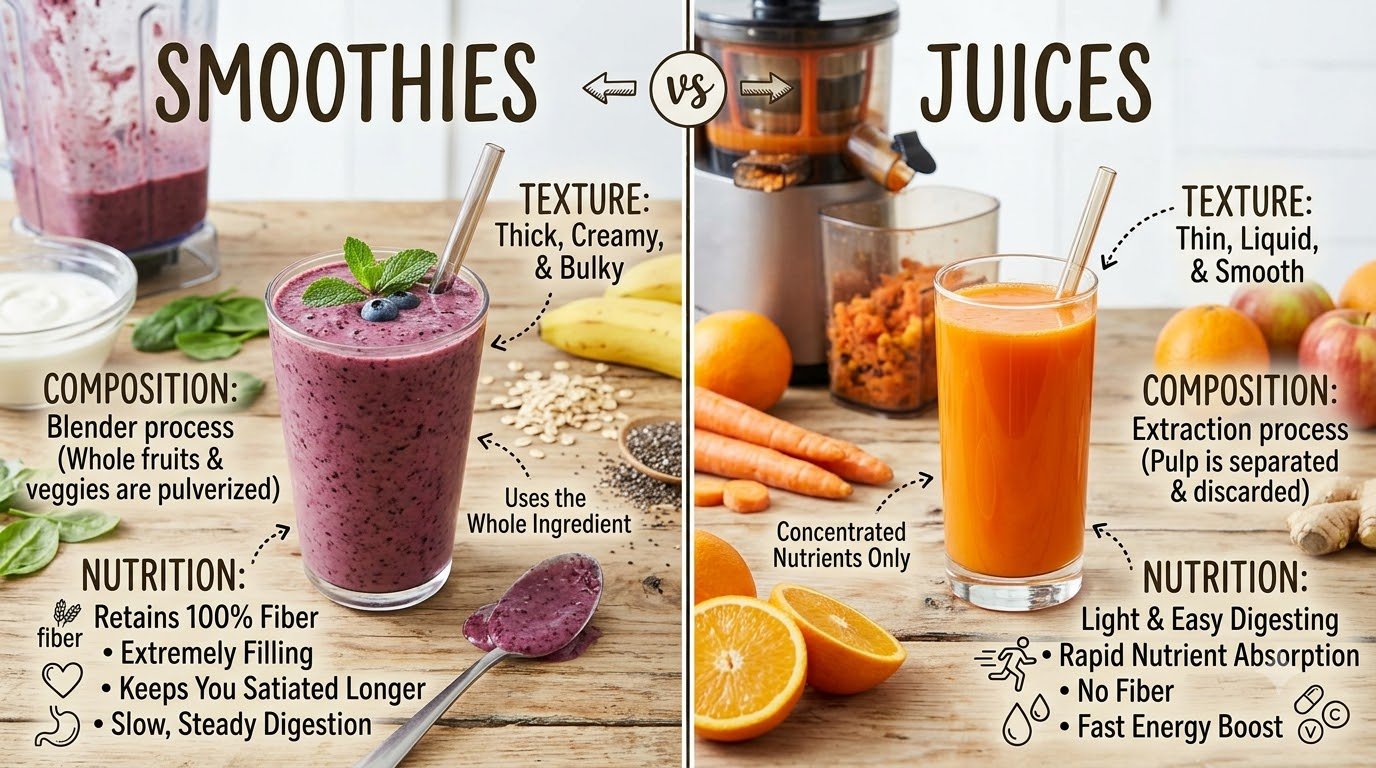
A smoothie is made by blending whole fruits and vegetables, so it keeps all the fiber. Fresh juice is the liquid pressed out of produce, with the pulp and most fiber removed. Smoothies are thicker and more filling. Juice is lighter, faster to drink and quicker to digest.
You see both on every cafe menu, and most people order one without knowing why they differ. At Kaffeine Caffe, the question comes up daily: “Which one should I get?” The answer depends on what you want from the glass: a quick refresher, a light breakfast, or a post-workout drink. [Insert city/neighbourhood line, e.g. “Whether you are stopping by after work in [CITY] or meeting friends on a weekend…”]
How Each Drink Is Made
The difference starts at the machine.
Smoothies: Blended
Everything goes into the blender: fruit, sometimes vegetables, and usually a base like yogurt, milk, a plant milk or ice. The blades break the produce down, but nothing is removed. The result is thick, creamy and filling.
Fresh Juice: Pressed or Extracted
A juicer separates the liquid from the pulp and skin. What reaches your glass is thin, bright and intense in flavour. The fiber stays behind in the pulp.
The Biggest Difference: Fiber
If you remember one thing, make it this: fiber is the dividing line.
Fiber slows digestion, helps keep blood sugar steadier and keeps you full for longer. Nutrition writers commonly put a glass of juice at around 0-1 gram of fiber, while a fruit-and-veg smoothie can supply several grams or more, depending on what goes in.
That is why a smoothie can work as a small meal, and a glass of juice rarely does.
Sugar and Blood Sugar
Both drinks contain natural fruit sugar. The difference is how fast it reaches you.
- Juice is a concentrated source. One orange has roughly 12 grams of sugar, while a cup of orange juice can carry around 22 grams, because it takes several oranges to fill a glass.
- Smoothies usually deliver sugar more slowly because the fiber is still there.
Juice is absorbed quickly, so it tends to raise blood sugar faster. Smoothies are gentler, but they are not sugar-free. Adding honey, sweetened yogurt or fruit syrups can push a smoothie higher than you expect
Nutrition: What You Gain and Lose
Juice gives you a concentrated hit of vitamins, minerals and plant compounds in an easy-to-drink form. You lose the fiber and some of the nutrients that sit in the skin and pulp.
Smoothies keep the fiber and can carry extra protein and healthy fat when you add yogurt, nuts, seeds or nut butter. The trade-off is that calories add up quickly if the cup is large or loaded with extras.
Neither drink replaces whole fruit and vegetables. Both are useful additions to a balanced diet.
Taste and Texture
This is where personal preference takes over.
- Smoothies are creamy, rich and dessert-like. Think mango and banana, strawberry and yogurt, or peanut butter and cocoa.
- Fresh juice is crisp and sharp. Think orange, watermelon, pineapple, or a green blend with cucumber and lemon.
Smoothie vs Fresh Juice: Quick Comparison
| Made by | Blending whole produce | Extracting liquid from produce |
| Fiber | Kept | Mostly removed |
| Texture | Thick and creamy | Thin and light |
| Fullness | Filling, can be a mini meal | Light, not very filling |
| Sugar absorption | Slower | Faster |
| Best for | Breakfast, post-workout, snack | Refreshing sip, hot afternoons |
Which One Should You Order?
Choose a smoothie when you are skipping a meal, heading to the gym, or want something that lasts until lunch.
Choose fresh juice when you want something light and refreshing, you already have food with it, or you simply love the clean taste of fruit.
A simple trick for juice: have it with food rather than on an empty stomach. Pairing it with a sandwich, eggs or a pastry slows the sugar rush.
For smoothies, ask for less added sweetener and extra protein or seeds if you want it more balanced.
How Kaffeine Caffe Approaches Smoothies and Juices
At Kaffeine Caffe, we treat the fruit bar the same way we treat the coffee bar: fresh ingredients, made to order, no shortcuts. You can ask us to adjust sweetness, swap the base, or add a boost.
Explore the menu here:
Questions to Ask Before You Order
Whether you are at our cafe or anywhere else, these questions help you get a better drink:
- Is the juice pressed fresh or poured from a bottle or concentrate?
- Is any sugar, syrup or sweetened yogurt added?
- What is the base of the smoothie: water, milk, plant milk, yogurt or juice?
- How large is the serving? Big cups hide a lot of sugar and calories.
- Can I add protein, seeds or greens?
- Can I get it less sweet?
authoritative source on fiber, free sugars and fruit juice, such as WHO
FAQs:
1. Is a smoothie healthier than fresh juice?
Usually a smoothie is the better all-round choice because it keeps the fiber, which helps with fullness and steadier blood sugar. Fresh juice still offers vitamins and flavour, and it can fit well when enjoyed in a small serving with food.
2. Does fresh juice have more sugar than a smoothie?
Juice is typically more concentrated in sugar per glass, since several fruits are squeezed into one serving and the fiber is gone. A smoothie can still be high in sugar if it includes sweeteners or sweetened yogurt.
3. Can a smoothie replace a meal?
Yes, if it includes protein and fiber, such as yogurt, milk, oats, nuts or seeds. A plain fruit smoothie is better treated as a snack.
4. Is fresh juice better than packaged juice?
Freshly pressed juice avoids the added sugar and preservatives found in some packaged drinks. Always check the label on bottled versions.
5. Which is better for weight loss?
Neither drink is a magic fix. A smoothie tends to keep you fuller on fewer calories overall, but portion size and added sugar matter more than the drink type. If you have a medical condition such as diabetes, check with your doctor or dietitian.
Ready to Taste the Difference?
Come try both and decide for yourself. Order a smoothie and a fresh juice side by side and see which one suits your mood. Visit Kaffeine Caffe


